Pose: AI Video Maker, AI Photo
- 4.4
- Rating
- 1.00M
- Installs
- Free
- Price
 Analysis by App-foxy
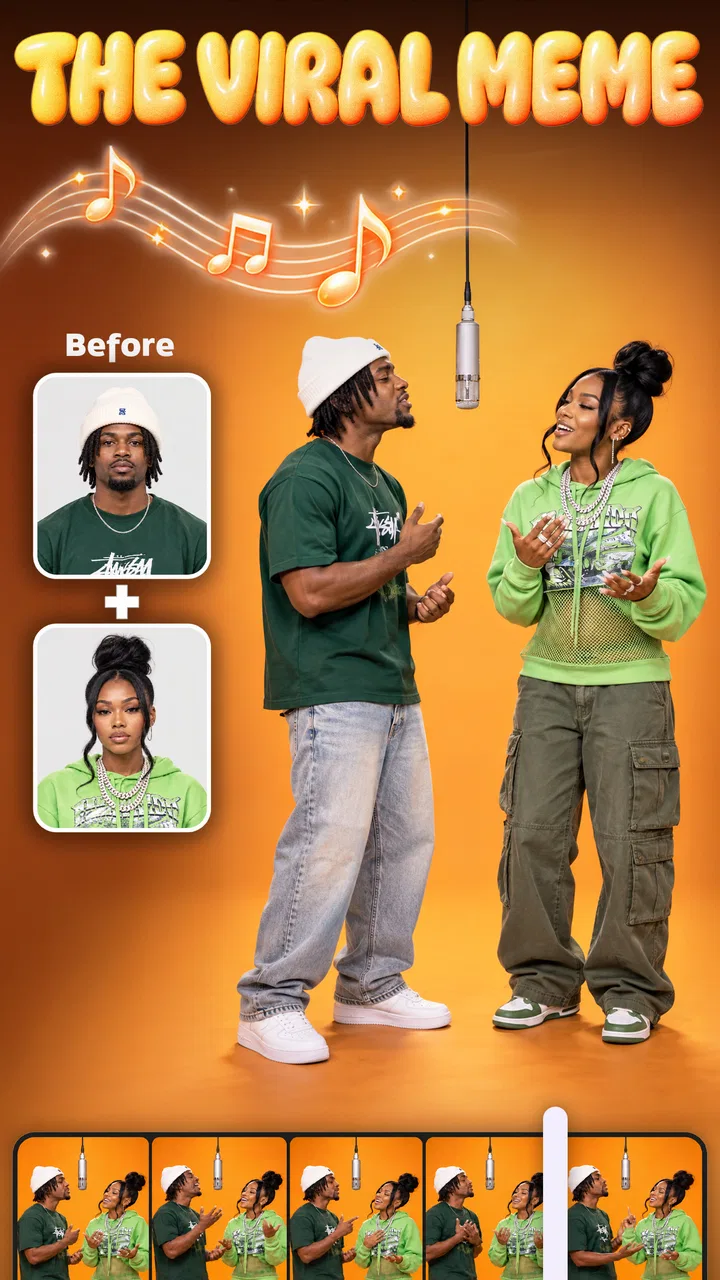
I tried Pose: AI Video Maker, AI Photo as a photography app for the moments when an ordinary picture feels too ordinary. Its focus is playful transformation: turning a photo into a caricature, an AI-generated video, or an AI dance-style creation that is easy to share. I found it most enjoyable when I treated the results as quick social experiments rather than polished replacement portraits.
That distinction matters in a household or shared-device setting. One person may want a funny image for a group chat, while another may prefer a more careful photo editor with manual control. Pose sits firmly on the playful, automated side. It is free to install, aimed at Everyone, and developed by M2R Teknoloji Anonim Sirketi. The app has reached over 500 thousand installs and holds a 4.5 average from around 23 thousand ratings, so it has clearly attracted a sizeable audience for this style of creation.
How Pose works when several people share the same phone
A realistic use case is a family gathering where several people take turns with one phone. Someone chooses a portrait, another person suggests a caricature style, and a third wants to see whether the same image can become a short AI video. This kind of pass-the-phone activity is where the app makes immediate sense: the appeal is visible quickly, and nobody needs to understand a complicated editing timeline before trying an idea.
You May Also Like

 Blood Strike: 2.5 Anniversary
Blood Strike’s Loadouts Turn Every Drop Into a Tactical Gamble
A close look at Blood Strike’s custom loadouts: how fast access to signature weapons reshapes its battle royale rhythm, rewards preparation, and narrows the gap between fights.

 Pandora - Music & Podcasts
Pandora’s Music Is Easy to Start, but Harder to Recover
Pandora’s strength is its low-effort path from a seed to a station. Its weak spot is how much confidence it asks you to place in connection, setup, and quiet recovery.

 8 Ball Pool
 Is Built on Rivalries, Rematches, and Routine
A close look at the rivalries, rematches, shared routines, and unanswered safety questions that turn a quick pool match into a persistent mobile community.

 Samsung Music
’s Quiet Strength Is Playing What You Already Own
Its reach comes less from spectacle than from dependable access to a personal library. That simplicity is both the app’s strongest retention engine and its ceiling.

 AccuWeather: Weather Radar
AccuWeather Review: A Quick, Clear Forecast for Everyday Decisions
For everyday plans, the best forecast is the one you can understand quickly. AccuWeather makes rain timing, radar, and local conditions easy to act on, with a few trade-offs.

 Hill Climb Racing
Why Hill Climb Racing Still Turns Crashes Into One More Run
A tiny car, a bumpy hill and one more upgrade: Hill Climb Racing keeps resurfacing because its simple chaos makes every near-miss feel personal.
More From Our News Desk
View All News


I would still keep the process organized. Before selecting a picture, I would create a small temporary album or otherwise agree which images are available for experimentation. That simple step avoids the common shared-device problem of using a private portrait, a work photo, or an image that somebody else did not intend to transform. The app encourages spontaneous creativity, but a little preparation makes the experience more comfortable for everyone.
The best results come from treating each image as a starting point, not a guarantee. A clear face with a straightforward pose gives the automated effect more to work with than a dark group shot, a heavily cropped picture, or a photo with several people overlapping. I would test one suitable image first, compare the output, and only then spend time preparing more variations. This is a more efficient workflow than uploading every picture from an event and hoping the app sorts out the difficult ones.
One useful household habit is to separate “fun now” from “keep later.” AI transformations can be entertaining for a few minutes but less appealing once the novelty fades. I would save only the versions that have a clear purpose, such as a birthday message, a lighthearted family chat post, or a creative profile experiment. That keeps the camera roll from filling with near-identical results and makes it easier to find the image worth sharing.
What the creative tools are actually good at
The caricature side is the easiest feature to understand. It gives a familiar face a stylized treatment without asking me to draw, mask, or adjust individual facial details. That makes it a good fit for users who want a recognizable joke or visual variation rather than a technically precise portrait. The result is also easier to explain to children or less technical relatives because the creative goal is obvious from the beginning.
The AI video and dance-oriented tools add a different kind of appeal. Instead of producing only a still image, they aim to make the source feel active and shareable. I see these options as conversation starters: they work best when the point is surprise, humor, or a quick social post. They are less suitable when I need exact movement, a professional presentation, or control over every frame.
A non-obvious trade-off is that automation reduces both effort and control. In a traditional photography editor, I can decide how much skin smoothing, cropping, color correction, or distortion to apply. Here, the attraction is that I do not have to build the effect manually, but I also have fewer opportunities to correct a result that feels slightly off. If the transformation changes the character of a face too much, repeating the process may be more practical than trying to repair it with detailed adjustments.
I also recommend judging the output at full size before sharing it. A thumbnail can look amusing while a larger view reveals awkward edges, an unnatural expression, or details that do not fit the original pose. This is especially important for a shared family photo, where one person may find an exaggerated result funny and another may feel misrepresented. A quick review by the person in the picture is a small courtesy that prevents unnecessary friction.
Setting boundaries before anyone starts creating
Because this is an AI photography app, the main boundary is not technical; it is social. On a shared phone, I would make it clear whose image is being used and who has the final say over sharing. A person agreeing to a private joke is not automatically agreeing to have the result posted publicly. Pose makes creation easy, so the household needs to supply the pause between making an image and distributing it.
I would also avoid using sensitive pictures as casual experiments. A school document, an identity photo, a medical image, or a private family moment has a different level of importance from a deliberately staged selfie. The safest everyday workflow is to choose a copy of a low-risk image, use it for the effect, inspect the result, and remove unwanted versions from the device afterward if they no longer serve a purpose.
Another practical boundary concerns account use and purchases. The app is free, but it includes in-app purchases ranging from $7.99 to $69.99 per item. On a device used by several people, I would never assume that “free to install” means every creative option is free. Before anyone taps a purchase button, the household should agree who is authorized to buy and whether the result is worth the cost. This is particularly important when a child is borrowing an adult’s phone or when payment details are already available on the device.
I would not hand over a signed-in phone and say “just try everything.” A better arrangement is to let the person choose the image and effect, then have the account holder review any purchase screen. That keeps creative participation open without turning an experiment into an accidental transaction. It also makes the boundary understandable: using the camera roll and paying for an option are separate decisions.
Coordinating a shared creative session
Pose works better in a group when everyone agrees on a small theme. For example, each person can choose one portrait for a caricature, then the group can compare which transformation feels most like the original person. Another approach is to use the AI video option for a planned greeting, where one person handles the photo, another checks the result, and a third decides whether it is suitable for the intended recipient.
This division of roles is useful because the person operating the phone is not always the person most affected by the result. A teenager may be comfortable with an exaggerated dance animation, while a parent may prefer a restrained caricature. Giving the subject a review step respects that difference without making the activity feel formal.
I found that a short naming routine also helps. Instead of leaving a collection of files with unclear names, I would identify them by occasion and person in the device’s normal photo organization tools. That makes coordination easier when several people create images during one gathering. It also reduces the chance of sending the wrong variation to a group chat, which is an easy mistake when multiple AI results look similar at a glance.
For a household that wants polished creative work, Pose may be only the first stage. I would use it to generate an amusing concept, then move the chosen result into a conventional editor for cropping, captions, or layout. This combination plays to each tool’s strength: Pose supplies the automated transformation, while a standard editor provides the final presentation control. Users who expect Pose itself to replace a full manual editing suite may find that workflow limiting.
Age, trust, and the meaning of the Everyone label
The Everyone content rating makes the app approachable for a broad audience, but I would not treat that as a substitute for adult guidance on a shared device. The rating describes the intended content level; it does not decide which family photo is appropriate to transform, who may share it, or whether an in-app purchase is acceptable. Those decisions still belong to the people using the phone and the household rules around it.
For younger users, I would begin with a supervised session using a deliberately chosen picture. The goal would be to teach three habits: ask before using someone’s face, inspect the result before sharing, and stop when a person says they do not like the outcome. These lessons are more valuable than simply showing where the buttons are, because AI image tools can make a private transformation feel instantly public.
Trust also matters between siblings and friends. A funny caricature can be harmless when the subject is involved, but uncomfortable when it is made secretly or circulated without permission. I would encourage users to show the finished image to the person pictured before sending it anywhere. That is not a limitation of Pose specifically; it is the sensible social rule for any tool that changes someone’s appearance quickly.
On a shared device, I would keep personal photo selection deliberate rather than letting everyone browse freely through the entire camera roll. Even without inventing special account or family controls, a household can create clear boundaries through separate albums, supervised selection, and a rule that private images are off-limits. These simple practices make the app feel safer and more respectful without taking away its playful character.
Where it stands against ordinary photography apps
Compared with a conventional photo editor, Pose is faster when the desired outcome is a recognizable novelty. I do not need to learn layers, brushes, masks, or a long list of adjustment sliders to reach a caricature-like result. That makes it more inviting for casual users and better suited to a five-minute group activity.
Traditional editors remain stronger when accuracy matters. If I want to correct lighting, preserve a natural face, make a precise crop, or design a carefully balanced social graphic, manual tools give me more predictable control. Pose is not the choice I would make for professional retouching, detailed portrait work, or a final image that must match a specific visual brief.
It also differs from a standard camera app because the creative decision often happens after the photo is taken. The camera captures the source, while Pose supplies an imaginative reinterpretation. That makes it useful for reusing an existing portrait rather than requiring a special photoshoot. The trade-off is that the quality and suitability of the original image still influence how convincing the transformation feels.
The app’s current version is 1.3.12, and its release date is October 31, 2025. It requires at least Android 9, which is a reasonable consideration for anyone installing it on an older shared phone. Before planning a family activity around it, I would check that the device meets that requirement and has enough room for the original photos and the generated results. The app is listed in the Photography category, but its appeal reaches into social sharing and casual entertainment.
Who should use it, and who should choose another tool
I would recommend Pose to people who enjoy quick visual experiments, want to turn a portrait into a playful caricature, or like the idea of animated and dance-themed AI creations without learning complex software. It is especially appealing for casual group use, greeting ideas, humorous posts, and testing how one photo changes across several creative directions.
I would steer a different user toward a conventional editor if they need detailed retouching, repeatable brand visuals, exact composition, or careful control over a person’s appearance. I would also skip it for a shared-device session if the household cannot agree on photo privacy and purchase boundaries. The app’s convenience is valuable only when the people involved are comfortable with the images being transformed.
Another reason to look elsewhere is workflow predictability. Automated effects are designed to surprise, and that means the output may not always match the mental picture I had in mind. If the goal is a specific pose, exact motion, or a polished result for work, a tool with manual timelines and direct editing controls is likely a better investment of time.
My household verdict
After using Pose as a casual photography companion, I see its strongest quality in how quickly it turns a normal portrait into something people can react to together. The caricature concept is immediately accessible, while the AI video and dance options give a shared phone session more variety than a basic filter app. It is easy to imagine using it after a family meal, during a birthday gathering, or when preparing a playful message for someone who enjoys visual jokes.
My recommendation comes with clear conditions. Choose images intentionally, let the person pictured approve the final result, and treat every purchase screen as an adult decision on a shared device. I would also keep expectations realistic: this is an automated creativity tool, not a replacement for a full photography editor. Its best results are quick, expressive, and social rather than perfectly controlled.
For a free app with an Everyone rating and a growing audience, it offers a friendly entry point into AI-assisted image and video creation. The optional purchases mean households should coordinate before exploring everything, but that is manageable with a simple review-and-approve routine. If your priority is playful transformation and easy experimentation, Pose: AI Video Maker, AI Photo is worth trying. If your priority is precision, privacy-free sharing, or professional-level editing control, I would choose a more traditional photography workflow instead.
FAQs for Pose: AI Video Maker, AI Photo
01What features does Pose: AI Video Maker, AI Photo offer?
Pose: AI Video Maker, AI Photo offers a wide array of features, including AI-driven video editing, customizable templates, and advanced photo enhancement tools. Users can create professional-quality videos and photos with ease, thanks to its intuitive interface and automated editing capabilities that cater to both beginners and experienced creators.
02Is Pose: AI Video Maker, AI Photo free to use?
Pose: AI Video Maker, AI Photo offers both free and premium versions. The free version includes basic features and tools, while the premium version unlocks additional templates, effects, and advanced editing options. Users can opt for a subscription model, which provides ongoing access to all premium features.
03How user-friendly is Pose: AI Video Maker, AI Photo for beginners?
Designed with a user-friendly interface, Pose: AI Video Maker, AI Photo is suitable for beginners. It provides guided tutorials and easy-to-follow instructions, allowing users with no prior experience in video or photo editing to quickly learn and create impressive content with minimal effort.
04Does Pose: AI Video Maker, AI Photo require an internet connection?
While an internet connection is required to download and install the app, most editing functions can be used offline. However, certain features, such as accessing cloud-based templates or updates, require an internet connection to function effectively. Users can enjoy versatile editing both online and offline.
05What devices are compatible with Pose: AI Video Maker, AI Photo?
Pose: AI Video Maker, AI Photo is compatible with both Android and iOS devices. It supports a wide range of smartphones and tablets, ensuring users can edit and create content on the go. The app is optimized for the latest operating systems to ensure smooth performance and user experience.
Pros
- User-friendly interface
- easy to navigate.
- High-quality AI-generated video results.
- Supports multiple video formats.
- Quick processing with minimal lag.
- Regular updates with new features.
Cons
- Occasional in-app ads can be disruptive.
- Requires stable internet for best performance.
- Limited features in free version.
- Some filters may appear repetitive.
- High battery consumption during use.

Pose: AI Video Maker, AI Photo
Gallery